
A new qualification for swim teachers is making a real splash after being added to the Scottish Credit and Qualifications Framework (SCQF).

Designed by the Swim Teachers’ Association (STA), the SCQF level 7 Swimming Teacher Qualification comes with eight credit points, which equates to 80 hours of learning.
The benefits of the qualification being on the SCQF
The qualification was put on the SCQF after completing the rigorous credit rating process by Qualifications Scotland Accreditation. This assures learners that the qualification is an official, properly recognised way into the profession.
At SCQF level 7, it is the same level of learning as Advanced Higher or an HNC, which tells helps you understand the knowledge and practical skill the course asks for.
The new qualification has been delivered to learners from April 2026.
Designed for how people learn now
This qualification was built with today’s learners in mind. Its aim is to help people build the skills, confidence and competence to teach safe, inclusive, effective lessons across the learn-to-swim pathway.
STA designed the course to reflect how people learn in today’s world. It begins with theory and then moves into practical, blended learning, so it fits the way learners process information.
The training is hands-on and face-to-face. Every learner gets assessed while teaching lessons, with real participants in the pool, in a safe and supportive environment. It’s competency-based, meaning it’s built around what the sector genuinely needs.
Learners are judged on their lesson planning and time management , alongside their teaching practice. The programme also uses AI-assisted marking to give an initial grade, but a human always reviews it before anything is final.
STA estimates 3,500 learners will become certified through the programme every year.

Why it matters
Jodie Davis, aquatics qualification development officer at STA, believes the SCQF recognition reflects the strength of the qualification and all the work that has gone into building it.
She explained: “Achieving SCQF Level 7 … provides clear assurance to employers, operators and learners in Scotland that this is a robust and professionally aligned route into the profession of swimming teaching. It also supports greater clarity and consistency across the sector, helping to strengthen workforce development and raise standards across aquatic education.”
What’s next
STA is rolling the qualification out across its network, working with training centres and tutors to make sure delivery stays consistent and of a high-quality.
Useful links
Find out more about the qualification at www.sta.co.uk.
Discover how a learning programme is placed on the SCQF.
Across Scotland, employers invest heavily in developing high-quality in-house training. Much of this learning is highly structured, assessed and essential to workforce competence – but without formal recognition outside the organisation.

Third party credit rating provides a way to change that, by formally placing learning on the Scottish Credit and Qualifications Framework (SCQF).
At Glasgow Clyde College, we support organisations through this process from initial enquiry through to approval and ongoing review.
Most recently, we credit rated NHS Scotland’s Central Decontamination Unit (CDU) Training Programme. Let’s take that as an example to see what happens behind the scenes.
1. Initial enquiry and suitability check
The process usually begins when an organisation asks a simple question: “Could this be credit rated?”
At this point, we carry out an initial discussion to assess whether the programme is likely to meet SCQF requirements. We are looking for four core conditions:
- Clearly written learning outcomes
- A minimum of 10 notional learning hours
- Formal assessment of learning
- A quality assurance process already in place
If these are in place (or close to being in place), the programme is likely suitable to progress.
In the CDU programme, NHS colleagues already had a highly structured, assessed training pathway aligned to clinical safety requirements, which made it a strong candidate from the outset.
2. Due diligence and organisational credibility
Before any credit rating work begins, the college must be satisfied that the organisation is a credible and stable training provider.
This involves reviewing evidence such as:
- Quality assurance systems and governance arrangements
- Assessment and marking processes (including independence, where applicable)
- Staff qualifications and training capability
- Internal verification or audit processes
- Learner support arrangements
- Organisational stability and delivery capacity
A formal agreement is then put in place between the college and the organisation setting out responsibilities, ownership of materials, and use of SCQF branding.
For the CDU programme, this included clarity on NHS Scotland Academy’s national delivery model and existing quality assurance structures across multiple sites.
3. Programme development and mapping
Once approved to proceed, the detailed credit rating work begins.
The organisation submits:
- A full programme specification
- Unit outlines (or structured learning components)
- Assessment materials and guidance
- Evidence of delivery and internal quality assurance
At this stage, we work closely with the organisation to refine documentation so it clearly demonstrates:
- What learners will know, understand and be able to do
- How they will be assessed
- How consistency is maintained across delivery
For NHS Scotland’s CDU programme, this involved breaking down technical workplace learning into clearly defined units aligned to practice in decontamination units.
4. SCQF level and credit allocation
A subject-specific credit rating panel is then convened by Glasgow Clyde College.
The panel includes:
- Subject specialists
- SCQF experts
- Independent members not involved in programme design
The panel’s role is to:
- Map learning outcomes against SCQF level descriptors
- Agree the appropriate SCQF level
- Calculate credit points based on notional learning hours (10 notional learning hours equates to 1 SCQF credit point)
- Record and justify decisions formally
This is one of the most important stages, ensuring consistency and integrity across the framework.
5. Outcome and formal approval
Once the panel has agreed the level and credit value, the college issues formal confirmation.

This includes:
- SCQF level and credit points awarded
- Any conditions or recommendations
- Requirements for use of the SCQF logo and terminology
- Confirmation of recognition
At this point, the programme becomes officially credit rated and can be promoted as SCQF-recognised learning. It is also added to the SCQF Register, which is a searchable database of all credit rated qualifications.
For the CDU programme, this meant the training was formally recognised at SCQF level 6, giving national visibility to a critical NHS workforce pathway.
On average, it takes around 6 months for a learning programme to go through the credit rating process, and it’s largely dependent upon the size of the project.
6. Ongoing monitoring and review
Credit rating is not a one-off exercise.
We maintain oversight through agreed review points to ensure:
- Programme content remains current
- Assessment methods remain valid
- Any changes are re-checked against SCQF levels
- Quality assurance continues to meet agreed standards
This ensures the integrity of SCQF credit rating over time.
Why the CDU programme matters
The CDU Programme demonstrates something important – structured, workplace-based training already delivering high standards can achieve national recognition without being redesigned as an academic course.
For learners, this means:
- Skills are visible and portable
- Clearer progression pathways within the NHS
For employers, it means:
- Stronger workforce development and retention
- Greater consistency and governance
- Recognition of complex, safety-critical training
Is your programme suitable for the SCQF?
Many organisations are surprised to learn their training programmes are already close to meeting SCQF requirements.
If your training:
- Develops real workplace competence
- Includes assessment and quality assurance
- Supports progression beyond basic induction
… it may already be ready for credit rating.
Getting started
Most organisations begin with a simple conversation and a draft outline of their programme. From there, we can advise on suitability and next steps.
To discuss a potential project and costs, which start at around £3,500, contact Elaine Donnelly at edonnelly@glasgowclyde.ac.uk
Useful links
Get Your Programme on the SCQF

The SCQF Partnership (SCQFP) has announced the organisations that will receive funding to have their interdisciplinary learning (IDL) programmes credit rated on the SCQF.
IDL programmes help young people learn by connecting different subjects and exploring real‑world issues.
Adding the programmes to the SCQF gives them recognition nationally and internationally and assures the quality of learning.
Successful funding bids
The organisations receiving funding are:
- The Wood Foundation
- Futures Institute at Dollar Academy
- Class Of Your Own
- Create School
- Kelvinside Academy
- Young Enterprise
- Edinburgh College / Code Division
The SCQFP was commissioned by Education Scotland to manage the funding distribution, with applications being invited for programmes that focused on:
- Social justice
- Political literacy
- Digital literacy
- Creativity
- Entrepreneurship
- Health and wellbeing
‘Recognised and trusted’ learning programmes
Donnie Wood, Head of Pathways Policy at the SCQFP, said: “We are delighted to support these organisations as they develop exciting and innovative interdisciplinary learning programmes for young people across Scotland.
“These projects will give learners valuable opportunities to connect ideas, explore real‑world challenges and build skills that will help them thrive in the future.
“By going through the credit rating process and being added to the SCQF, we can ensure that these learning programmes are recognised and trusted for years to come.”
Over the coming months, we’ll be shining the spotlight on these organisations in a new blog series to discover more about their learning programmes.
Useful links
Organisations invited to apply for credit rating funding
How to get your learning programme on the SCQF
One of our college Credit Rating Bodies (CRBs) recently got in touch to ask whether they could issue E-Certificates for SCQF credit rated units or programmes, or if they had to stick with paper ones.

It’s a great question, and one that’s probably on the minds of other colleges and SCQFP-approved CRBs too, so we thought we’d share some best practice guidance.
The short answer: Yes, you can issue E-Certificates
The SCQF Quality Assurance Model doesn’t require certificates to be paper-based. What matters is the content, not the format. Principle 10 of the SCQF Handbook specifies what information must appear on certificates, but it doesn’t dictate whether they need to be physical documents.
This means you’re free to transition to E-Certificates for any programme or part of a programme that has been credit rated for the SCQF.
Learning from those who’ve already made the switch
To help inform our guidance, we spoke to our colleagues at OPITO, who confirmed they’ve successfully switched to E-Certificates for their SCQF credit rated programmes. Their experience — and that of other approved CRBs who’ve made this move — has shaped our recommendations below.
Best practice recommendations for E-Certificates
Format and accessibility
Your E-Certificate should be a secure document format, such as a PDF, that learners can easily download, save and print. This ensures learners have full control over their credentials and can access them whenever needed.
Security features
Following OPITO’s example, we highly recommend incorporating a QR code or similar verification feature that links to a validation tool. This helps ensure authenticity and makes it easy for employers and other institutions to verify credentials.
Mandatory content
Your E-Certificate must include all the required information set out in Principle 10 of the SCQF Handbook:
- The full title of the unit or programme
- Total SCQF credit points
- SCQF level
- SCQF logo
- Your name as the Credit Rating Body
Systems and processes
From our discussions, we gather that the practical challenges of moving to E-Certificates centre on operational readiness rather than compliance. Make sure your student records system can robustly generate, store and provide access to digital certificates. Equally important is ensuring that both staff and learners understand how to access and use these certificates.
Key takeaway
According to feedback, the main challenges in transitioning to E-Certificates relate to system readiness and staff training, not regulatory compliance. With proper planning and the right systems in place, the move to digital certification can be straightforward and beneficial for both your organisation and your learners.
If you have questions about implementing E-Certificates for your SCQF programmes, please don’t hesitate to get in touch at info@scqf.org.uk

The SCQF Partnership is inviting organisations to apply for funding to have their interdisciplinary learning (IDL) programmes or awards credit rated onto the Scottish Credit and Qualifications Framework (SCQF).
This initiative aims to increase the number of high-quality, credit rated courses that support Scotland’s growing emphasis on interdisciplinary learning.
Funding available
Successful applicants will receive an award, split between:
- the programme development and preparation for credit rating
- the costs associated with credit rating and adding the programme to the SCQF Register
Eligibility criteria
Programmes must:
- Fit within the definition of interdisciplinary project-based learning
- Have a strong uptake in terms of learners
- Be aimed mainly (but not solely) at children and young people up to age 18
- Be offered to learners in Scotland
- Would be expected to sit at SCQF level 7 or below
- Carry 12, 18 or 24 SCQF credit points
- Be available for at least three years once credit rated
- Be solely owned by the applying organisation (collaboration is permitted, but one organisation must lead)
In addition to funding, the SCQF Partnership will provide training on the credit rating process, support with programme development, and introductions to Credit Rating Bodies.
Priority themes
While all eligible interdisciplinary learning projects are welcome, the SCQF Partnership is particularly keen to fund those focusing on:
- Social justice
- Political literacy
- Digital literacy
- Creativity
- Entrepreneurship
- Health and wellbeing
What is interdisciplinary learning?
Interdisciplinary learning is a planned approach that integrates different subject areas to explore real-world issues and challenges in meaningful and connected ways. It encourages young people to apply knowledge and skills across disciplines, develop independence, and tackle complex problems through inquiry-led learning models.
How to apply
We recommend having an informal conversation with us before applying to ensure your proposal is eligible and your programme is ready for credit rating. Get in touch by emailing IDLproject@scqf.org.uk
Organisations should complete the application form and submit it via email to the above address by 12 noon on Friday, January 23 2026. All funded projects must be completed by the end of October 2026.
Documents
To heal others, you must first heal yourself. This simple truth lies at the heart of the training offered by the Garnethill Centre in Glasgow.
For over four decades, the centre has been quietly enabling people to begin transforming their lives – not just of the clients who walk through their doors, but of the professionals they train to become skilled psychodynamic counsellors.

A key part of the centre is its two-year part-time psychodynamic counselling diploma. The course is intensely experiential, combining rigorous academic study with deep personal work that graduates describe as “life-changing”.
What is psychodynamic counselling?
Psychodynamic counselling explores the hidden connections between our past and present, uncovering the unconscious patterns that shape our relationships and experiences.
It is also central to this approach to explore those aspects of the self that are not fully known and that we may not be conscious of, particularly as they emerge and are potentially influenced in the here and now of the therapeutic relationship.
While all successful therapies seek to relieve symptoms like depression and anxiety, the aims of psychodynamic counselling extend beyond this.
By providing a safe and deeply authentic relationship, the counsellor seeks to foster and develop psychological capacities and resources in the client that enable them to live and relate to others in a more meaningful and satisfying way.
An SCQF level 10 course
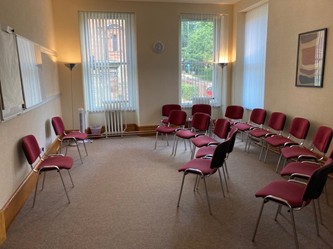
The programme was credit rated by the University of the West of Scotland and sits at SCQF level 10 with 120 credit points. It also has professional validation from COSCA (Counselling and Psychotherapy in Scotland).
The course is highly experiential and comprises theoretical seminars; clinical seminars; counselling skills practice; experiential groups; personal and group tutorials; supervised counselling practice; and the requirement for participants to undertake their own personal therapy. Course theory is underpinned by attachment theory and object relations.
Students qualify as psychodynamic counsellors once they achieve the diploma, after which they may proceed directly to professional registration and/or accreditation with a relevant professional body. Many graduates of the centre go on to take up counselling posts, while others remain in their current posts with enhanced competence.
What graduates are saying
An intense, life-changing experience…that will stay with me for the rest of my life.
A rigorous course. Incredibly useful. I have developed a genuine sense of confidence in my work with clients – something I could not imagine at the start.
I have learned so much about myself, theory and skills. I now have a solid foundation to build on for my future career as a counsellor.
More information
To learn more about the diploma, visit their website
To find out how you can have your learning or training programme added to the SCQF, visit Get Your Programme on the SCQF.
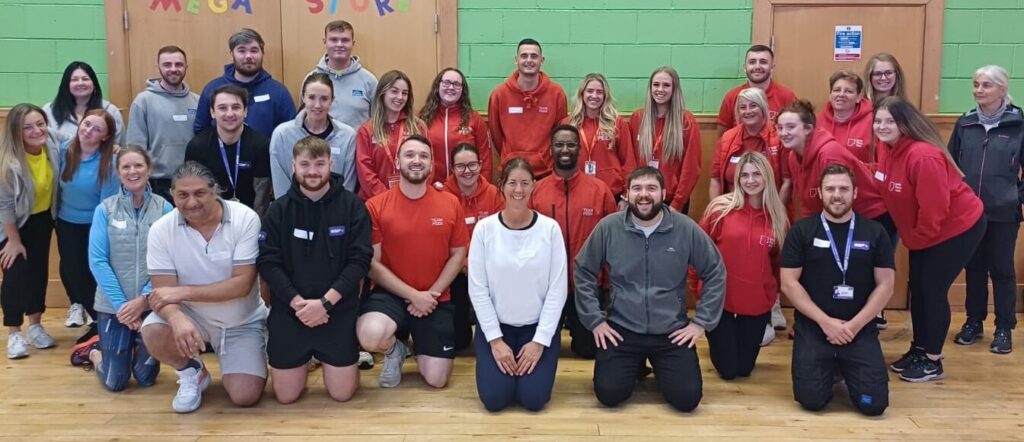
Actify is on a mission to get more children, more active, more often. By combining expert training with powerful digital tools, we have been helping sport, physical activity, and fitness organisations across Scotland make a real difference in their communities since 2018.
With a team that brings together experience in education, sport, play, and digital content, Actify works with over 300 organisations across Scotland. Our mission is simple – get more people, more active, more often.
Active Play Training
One of our key initiatives is Active Play Training – a programme that empowers adults to increase children’s physical activity levels through outdoor play.
The training is designed for anyone in the children and young people’s workforce – teachers, play leaders, nursery staff, community workers, and parents.

Many of these adults aren’t aware of how much physical activity children need or lack confidence in facilitating it.
Through hands-on, practical learning, Active Play Training builds knowledge, skills and motivation to make active outdoor play fun, inclusive and impactful.
Actify Platform
The programme is delivered through a combination of practical workshops and digital resources on the Actify Platform, which supports blended learning through our Active Play Training Hub. Here, participants access modules, videos, reflective tasks and quizzes – enabling flexible learning regardless of time or location.
The platform also ensures consistency in training and allows us to scale delivery across Scotland.
Our training, credit rated by SQA, offers a structured learning pathway with three levels:
- Level 6 (with 2 credit points) – Facilitator: For those working directly with children, offering tools to introduce fun and inclusive Active Play.
- Level 7 (with 3 credit points) – Leader: Aimed at those delivering regularly in communities, with a focus on overcoming barriers to participation.
- Level 8 (with 1 credit point) – Educator: Empowers individuals to train others, extending the programme’s reach.
Credit rating
SCQF credit rating adds value for learners by formally recognising their achievements and helping to build confidence and qualifications. It also builds capacity within communities to lead and sustain Active Play independently.
The feedback from participants has been overwhelmingly positive.
One early years practitioner shared: “It’s a good balance of information, theory and practical games.”
Another participant described it as: “Fun, interesting, informative and motivating.”
Others highlighted the value of STEPS – a practical method for adapting activities for all children.
With childhood physical activity levels in crisis, Active Play Training is a vital tool to help reverse the trend. Through skilled, confident adults, we can embed Active Play across homes, schools and communities—helping children in Scotland lead healthier, more active lives.
Useful links
For more information on Actify, visit the website.
Learn more about having your learning programme credit rated to the SCQF.

Lothian has become the first Scottish bus operator to provide its new drivers with a qualification on completion of their training.
The training is certified and quality assured by the Scottish Qualifications Authority (SQA).
The transport operator, which services Edinburgh and the Lothians, has an award-winning in-house training school. It successfully trained 450 new bus drivers in 2024.
The school aims to develop new recruits’ knowledge and understanding, and lays the foundations for a long and rewarding career as a Lothian bus driver.
Bus driver qualification at SCQF level 6
With this new accreditation, trainees will not only be fully prepared to get behind the wheel as a safe, competent bus driver, but they will have earned an SCQF level 6 Customised Award for Driver Training with 10 credits. They will also receive a record of achievement for their efforts.
Lothian’s training school teaches new recruits a wide range of skills that go beyond the operation of their vehicle. This includes:
- How to work safely in the bus depot
- Effective communication
- Customer interaction
- How to deal with unusual or emergency situations.
No matter your background or experience, Lothian’s training school will give you all the skills and tools you need to get your new career in gear.
Driver and trainer testimonials
“Lothian’s Training School taught me everything I need to know about what it takes to be a bus driver. The SCQF level 6 qualification is a great way to demonstrate all the hard work that goes into learning a new skill like this.” Andrew Moffatt, trainee driver
“We’re delighted to now be able to offer trainee drivers this customised award which demonstrates the breadth of their learning. It will hopefully inspire others to consider a career in the bus sector as a bus driver.” Willie Hamilton, director of operations at Lothian
Useful links
Learn more about a career as a Lothian bus driver.
Find out more about getting your training programme on the SCQF.
Watch a case study on the benefits of having your training programme credit rated to the SCQF.