
Get to know the people behind the SCQF Partnership (SCQFP). In this new blog series, we shine a spotlight on our Board members and the valuable experience, perspectives and leadership they bring to the organisation. This week, it’s the turn of Martin Jones.
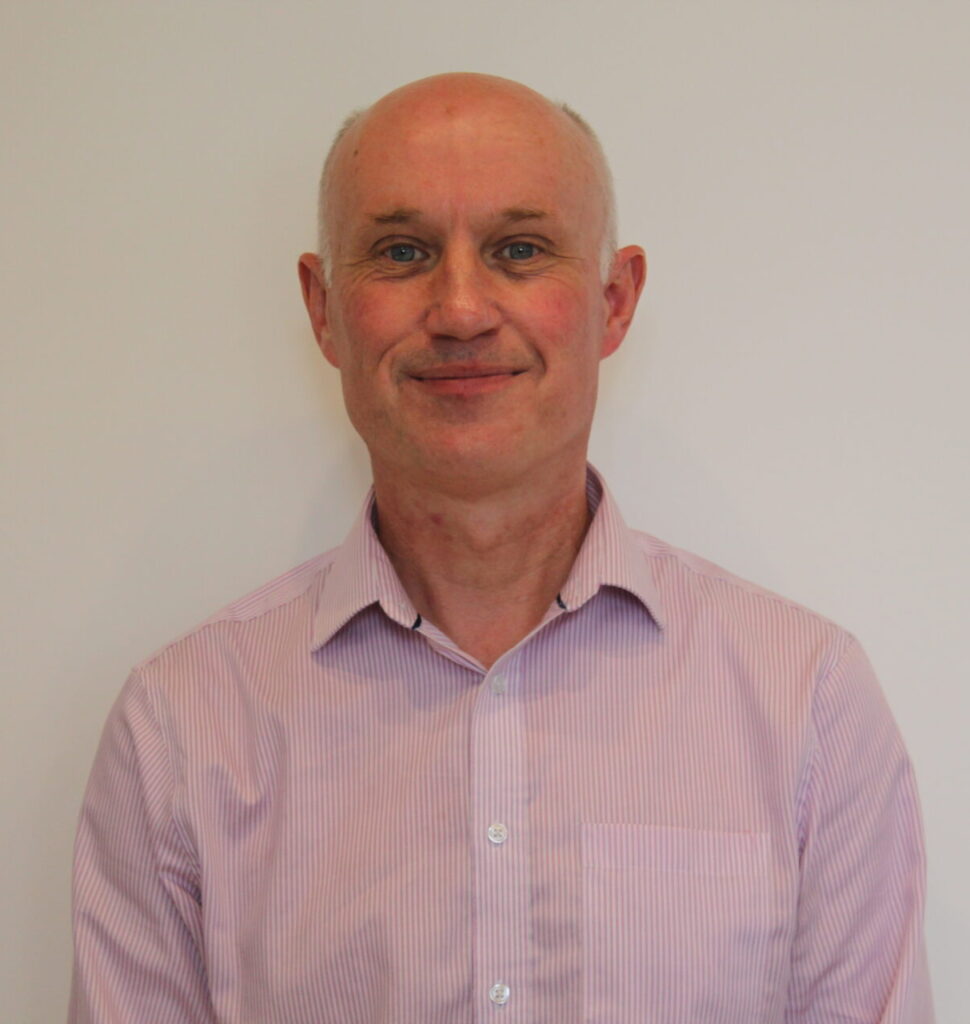
Martin has over 30 years’ experience in tertiary education, primarily working within a law school environment.
During 15 years at Glasgow Caledonian University (GCU), he held a number of leadership roles, including leading the law team.
More recently, he has worked within the University of the Highlands and Islands as Principal and CEO at UHI Argyll.
In 2025, he became Dean and CEO of the Institute of Law, Jersey.
An advocate for technology in learning, he is passionate about widening access to the legal profession and is a member of the Law Society of Scotland’s Education and Training Committee.
As we celebrate the 25th anniversary of the SCQF, we caught up with Martin to learn more about his vision for the Framework’s future.
What’s been the most rewarding aspect of serving on the Board?
Seeing key representative stakeholders in Scotland’s educational landscape engage around the Framework as an important calibration of education and training in Scotland and how that is never more relevant than today. Also seeing, how the SCQFP’s impact is driven by a relatively small team of dedicated staff.
What do you see as the SCQF’s most important contribution to Scottish education and skills development in the past 25 years?
The opportunity that the Framework gives for learners to situate themselves within the levels and to plot an individual journey which may be navigated in a concentrated burst through school, college, university and workplace or alternatively in a more ad hoc fashion over a considerable number of years – but all tied together with a sense of benchmarked, coherent progression.
How do you see the SCQF evolving over the next 25 years?
The adoption of the Framework wherever learning and skills acquisition takes place has been central to the last 25 years.
Those opportunities for learning will likely expand in the context of digital offerings and may emerge in ways that are not entirely obvious at this moment in time and from providers that may be outside traditional contexts too.
The need for SCQF to remain present and to anchor learning as people are driven to learn to remain relevant in a changing job market will be paramount.
Can you share an example of how you’ve seen the SCQF make a real difference to learners, training providers & employers?
In my former working life at UHI Argyll seeing the Framework being used to plan and create coherent learner pathways from school through college and university qualifications in a single tertiary institution is exactly how it can be used strategically for individual benefit.
Also, at Ocean Youth Trust (Scotland) I saw how the achievement of benchmarked qualifications achieved in the context of a boating adventure was so important to some young people who may have struggled to achieve the equivalent at school.
Why should learners, training providers and employers care about the SCQF?
I would highlight, in particular, the role of employers in looking at the range of qualifications that any potential employees might be bringing to the table and, therefore, be looking at them as individuals.
Equally, when planning to invest in the education and training of their employees, it enables them to make the right decision about what is the best next step for the benefit of the organisation and the individual.
What makes the Partnership model effective for Scotland’s qualifications landscape?
Partnership is just that. Nobody can ‘own’ the SCQFP or set its agenda without collaborating with the voices from all corners of the skills and education landscape in Scotland.
That is also reflective of the fact that learners will likely engage with the various constituent parts across their lifetime.
What’s one thing you would like more people to understand about the SCQF?
Engaging with the Framework is not a single linear journey to reach the highest pinnacle that you can in a particular specialism.
The nature of learning and skills acquisition is such that you may have concurrent or parallel journeys as you develop your career, change career or engage for the love of learning across your lifetime.

As the Scottish Credit & Qualifications Framework (SCQF) marks its 25th anniversary in 2026, we’re shining a spotlight on the people shaping its direction — the SCQF Partnership (SCQFP) Board. First in the series, we meet our Chair, John Evans, who shares his insights into the Framework’s successes and challenges.
John was appointed to the role of SCQFP Board Chair in December 2023.
He holds a number of non-executive positions in the private, public and third sector and is also a director of a Scottish League Football Club. John has worked in senior leadership roles across a range of sectors, including education.
About John’s role
Q: What motivated you to apply for the role of SCQFP Board Chair?
A: I had worked with the SCQFP during my time as HR Director with the police and also as Chair of a Sector Skills Council. I knew the importance of the work and the role to be played in creating a mobile and skilled workforce in Scotland. I felt I could bring an employer’s perspective o the Board.
Q: What’s been the most rewarding aspect of serving on the Board?
A: Seeing the SCQFP team and our contribution develop has been the most rewarding aspect. I believe we now truly understand our value and impact and how we can make a difference. For example, the recent collaboration with the British Council Scotland showed just how much we can offer to other countries.
Strategic vision
Q: What do you see as the SCQF’s most important contribution to Scottish education and skills development in the past 25 years?
A: The most important contribution has been providing a framework and common language for learning and qualifications in Scotland. We often take it for granted, but it’s been a long journey and we’ve benefitted from some fantastic contributions and people.
Q: How do you see the SCQF evolving over the next 25 years?
A: Recognition of Prior Learning will become increasingly important, particularly as people move between roles and sectors throughout their careers. For the SCQF, that means continuing to ensure that the processes around RPL are robust, trusted and clearly communicated. We are in the midst of a skills and work revolution that is possibly greater than the Industrial Revolution and we need to make sure that we have a mobile, agile and skilled workforce. I believe that AI makes human skills and judgement even more important and our work will be at the forefront of that evolution.
Impact and value
Q: Can you share an example of how you’ve seen the SCQF make a real difference to learners, training providers & employers?
A: I have seen first-hand how the SCQF can transform training and development. One example that stands out is my work with the Scottish Police College, where learning moved from a largely rote-based approach to a more work-based model. Crucially, it gave that learning a recognised currency, allowing it to be understood and valued beyond policing. That shift did more than strengthen skills and knowledge – it helped broaden routes into leadership, influenced the profile of people being recruited, and ultimately supported better outcomes for communities across Scotland.
Q: Why should learners, training providers and employers care about the SCQF?
A: It gives us a common currency, understanding, standards and dialogue that connects employers, learning providers and qualification bodies and, most of all, has the learner at the heart of that framework.
Collaboration
Q: What makes the Partnership model effective for Scotland’s qualifications landscape?
A: Just that …. it’s a partnership.
Q: What’s one thing you’d like more people to understand about the SCQF?
A: We need to make it simpler to understand – for everyone involved. I’m not sure that when a learner (or parent/carer) sees an SCQF level on a certificate they always know what it means. Likewise for employers. We do our utmost to help people understand the SCQF, but there’s always work to be done.
Learn more about the SCQFP Board at How We Operate.