
Get to know the people behind the SCQF Partnership (SCQFP). In this new blog series, we shine a spotlight on our Board members and the valuable experience, perspectives and leadership they bring to the organisation. This week, it’s the turn of Martin Jones.
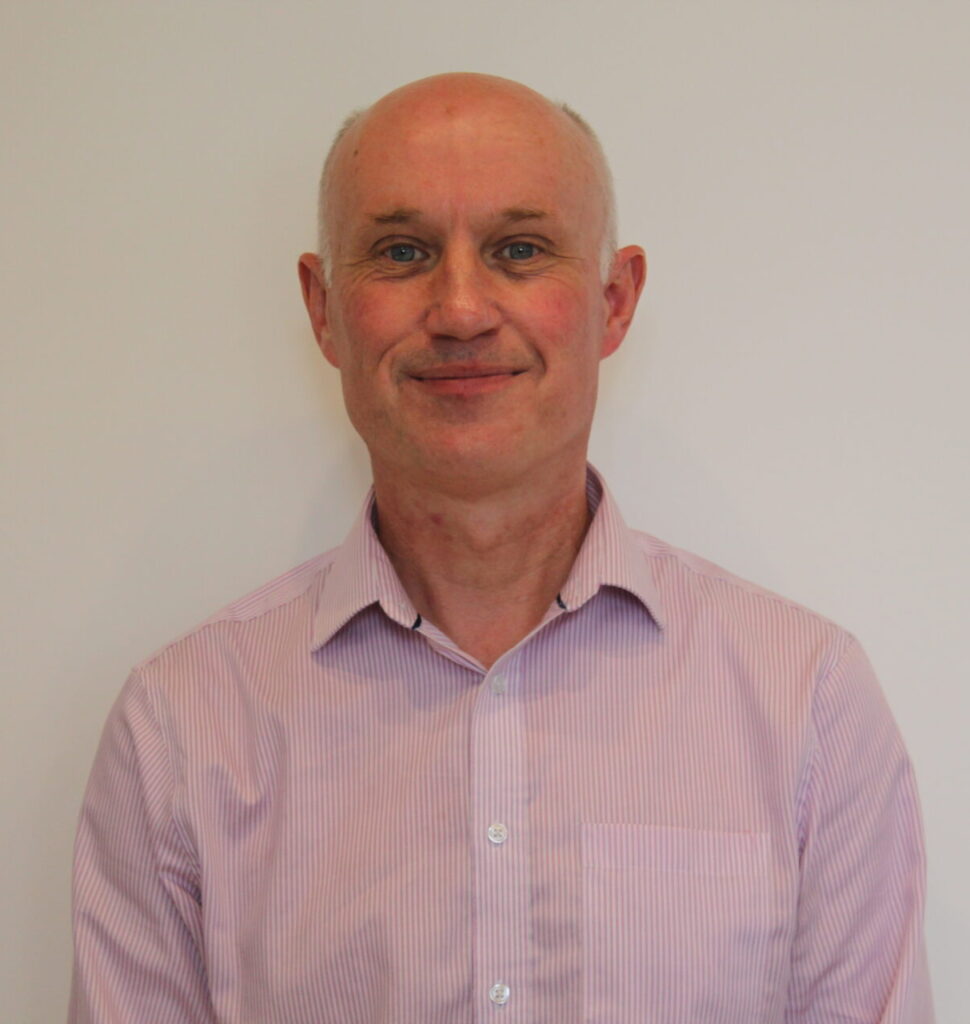
Martin has over 30 years’ experience in tertiary education, primarily working within a law school environment.
During 15 years at Glasgow Caledonian University (GCU), he held a number of leadership roles, including leading the law team.
More recently, he has worked within the University of the Highlands and Islands as Principal and CEO at UHI Argyll.
In 2025, he became Dean and CEO of the Institute of Law, Jersey.
An advocate for technology in learning, he is passionate about widening access to the legal profession and is a member of the Law Society of Scotland’s Education and Training Committee.
As we celebrate the 25th anniversary of the SCQF, we caught up with Martin to learn more about his vision for the Framework’s future.
What’s been the most rewarding aspect of serving on the Board?
Seeing key representative stakeholders in Scotland’s educational landscape engage around the Framework as an important calibration of education and training in Scotland and how that is never more relevant than today. Also seeing, how the SCQFP’s impact is driven by a relatively small team of dedicated staff.
What do you see as the SCQF’s most important contribution to Scottish education and skills development in the past 25 years?
The opportunity that the Framework gives for learners to situate themselves within the levels and to plot an individual journey which may be navigated in a concentrated burst through school, college, university and workplace or alternatively in a more ad hoc fashion over a considerable number of years – but all tied together with a sense of benchmarked, coherent progression.
How do you see the SCQF evolving over the next 25 years?
The adoption of the Framework wherever learning and skills acquisition takes place has been central to the last 25 years.
Those opportunities for learning will likely expand in the context of digital offerings and may emerge in ways that are not entirely obvious at this moment in time and from providers that may be outside traditional contexts too.
The need for SCQF to remain present and to anchor learning as people are driven to learn to remain relevant in a changing job market will be paramount.
Can you share an example of how you’ve seen the SCQF make a real difference to learners, training providers & employers?
In my former working life at UHI Argyll seeing the Framework being used to plan and create coherent learner pathways from school through college and university qualifications in a single tertiary institution is exactly how it can be used strategically for individual benefit.
Also, at Ocean Youth Trust (Scotland) I saw how the achievement of benchmarked qualifications achieved in the context of a boating adventure was so important to some young people who may have struggled to achieve the equivalent at school.
Why should learners, training providers and employers care about the SCQF?
I would highlight, in particular, the role of employers in looking at the range of qualifications that any potential employees might be bringing to the table and, therefore, be looking at them as individuals.
Equally, when planning to invest in the education and training of their employees, it enables them to make the right decision about what is the best next step for the benefit of the organisation and the individual.
What makes the Partnership model effective for Scotland’s qualifications landscape?
Partnership is just that. Nobody can ‘own’ the SCQFP or set its agenda without collaborating with the voices from all corners of the skills and education landscape in Scotland.
That is also reflective of the fact that learners will likely engage with the various constituent parts across their lifetime.
What’s one thing you would like more people to understand about the SCQF?
Engaging with the Framework is not a single linear journey to reach the highest pinnacle that you can in a particular specialism.
The nature of learning and skills acquisition is such that you may have concurrent or parallel journeys as you develop your career, change career or engage for the love of learning across your lifetime.