
Scotland has no shortage of skills and talent. What it lacks is a consistently used Recognition of Prior Learning (RPL) system capable of recognising where and how learning has taken place.

Every day, people acquire valuable learning through life experience, employment, volunteering, military service, professional development, migration and community activity. Yet too often, that learning remains invisible when people seek to progress in education, employment or their careers.
The consequences are significant. People can repeat learning they have already achieved, employers can struggle to identify the full range of skills within their workforce, and individuals can face unnecessary barriers to progression. The result is wasted time, wasted talent and unnecessary cost for individuals, employers and the public purse.
What is RPL?
At its heart, RPL is a simple idea. Learning gained through experience should count alongside learning gained in classrooms.
The Scottish Credit and Qualifications Framework (SCQF) has a set of RPL principles adhered to by all of Scotland’s universities, colleges and Qualifications Scotland. These principles help maintain our ethos that ‘All Learning Counts’.
The challenge has been creating a level playing field within Scotland for all candidates to have their learning recognised.
And, importantly, many learners aren’t even aware that they can have their prior learning recognised.
A significant opportunity for Scotland
For decades, RPL has existed at the margins of Scotland’s education and skills landscape. It has been understood by practitioners, used sporadically, and commonly associated with articulation from college to university. However, a growing body of evidence suggests that RPL is not simply a process to speed up people’s learning journeys. It is potentially one of the most significant economic and social reforms available to Scotland in the coming decade.
Our research shows that RPL represents a major economic opportunity. Modelling suggests that increased RPL activity across a range of pathways could generate between £40 million and £152 million in additional Gross Value Added over ten years, alongside direct cost savings of between £37 million and £99 million. Combined economic benefits are estimated at between £77 million and £251 million, even under relatively modest adoption scenarios. Importantly, these figures only reflect selected sectors and pathways. The true impact could be considerably larger.
The economic case is compelling. But the social case may be just as important. A national RPL system also has the potential to widen opportunity for groups who often encounter barriers within traditional learning pathways. Adult returners, veterans, migrant workers, refugees and career changers, who frequently possess valuable learning, skills and experiences that remain unrecognised and undervalued.

For many of these individuals, progression is delayed not because they lack competence, but because the system lacks mechanisms to recognise learning, skills and competences.
The focus should shift from debating whether RPL is beneficial, to talking about how we should implement it.
The invisibility of RPL practices
Across higher education, professional sectors, colleges and workplaces, there are numerous examples of recognition of prior learning in action. The problem is that these practices remain fragmented, inconsistent and often invisible to those who would benefit most from them.
Countries that have successfully scaled RPL have not done so through policy statements alone. Australia, France and Ireland all demonstrate that growth occurs when national ambition is matched by funding, leadership and clear learner entitlements.
Scotland’s challenge is, therefore, not principally a procedural issue, but one linked to many social and economic factors.
The big question
The question facing Scotland is larger than RPL itself. It is about what kind of skills framework Scotland wants to build. One model continues to favour formal routes and institutional boundaries. The other starts from the premise that learning occurs everywhere and that the role of the RPL process is to recognise, validate and build upon it.
The evidence emerging from Scotland’s national RPL work, led by the SCQF Partnership at the request of the Scottish Government, suggests the latter approach is not only fairer but more economically efficient. It reduces duplication of learning, facilitates quicker progression routes, promotes faster movement into skills roles and creates better utilisation of existing skills.
The real opportunity lies not in creating another policy initiative, but in creating a new social contract around learning, one that values experiential learning as highly as formal qualifications.
What’s next for RPL in Scotland?
The country already possesses the building blocks of RPL within the SCQF. The challenge now is finding the ambition to assemble them – and to make recognition of prior learning a routine part of how Scotland recognises skills, qualifications and progression.
If Scotland succeeds, RPL for experiential learning may come to be viewed not just in pockets of good practice, but as a cornerstone of a modern skills system and a wellbeing economy.
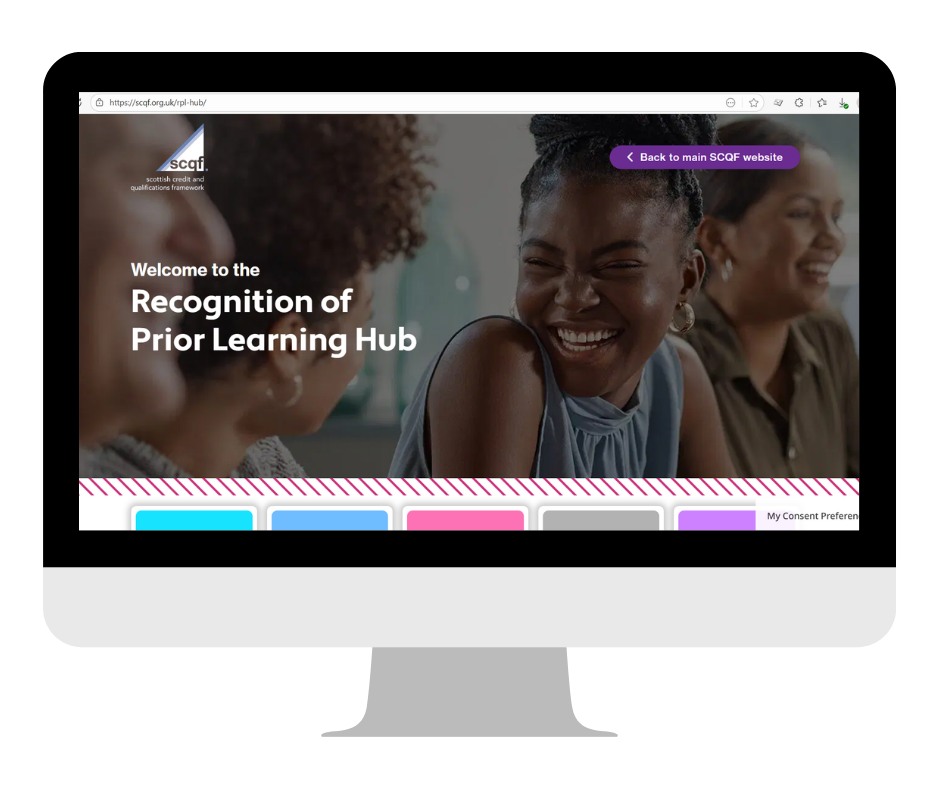
Our RPL Hub showcases inspirational examples of RPL in action across Scotland, highlighting the good practice already taking place and demonstrating the potential for these approaches to be adopted more widely.
Our RPL Network
To join the conversation and have your say, join our new LinkedIn network – Recognition of Prior Learning (RPL) in Scotland. The network will bring together people working in and around Recognition of Prior Learning (RPL) across Scotland – providing a space to share experiences, exchange ideas, showcase good practice and learn from one another.

The SCQF Partnership (SCQFP) is delighted to announce the internal recruitment of two staff members to new, more senior roles.
The appointments reflect the organisation’s continued focus on strengthening Scotland’s lifelong learning landscape.
Head of Operations
Marissa Lippiatt is now Head of Operations, taking on responsibility for the overall management and delivery of the SCQFP’s operational functions.
Marissa, who previously served as Head of Development and Engagement, brings extensive experience in programme delivery and stakeholder engagement. In her new role, she will focus on strengthening operational performance and reporting, digital transformation and ensuring the effective delivery of the organisation’s objectives.
Head of Pathways Policy
Donnie Wood has taken up the post of Head of Pathways Policy, having previously been the Lead for Learning Pathways. Donnie will now have strategic oversight of the SCQFP’s work in developing pathways across the education, training and employment sectors, helping to ensure that the SCQF remains central to skills planning and workforce development in Scotland.
A fourth member of SCQF Partnership’s Leadership Team, the Head of Assurance, has been externally recruited and will be joining the team in September 2025.
‘A wealth of knowledge’
Pauline Radcliffe, Chief Executive of the SCQFP, said: “I am delighted to see Marissa and Donnie step into these important roles. Both have been instrumental in driving forward our work in recent years and bring a wealth of knowledge and commitment to the organisation.
“Their appointments strengthen our capacity to support the needs of learners, employers and education providers across Scotland, ensuring the SCQF continues to play a vital role in supporting progression and widening access to learning.”
The SCQFP remains committed to promoting the value of the SCQF as Scotland’s national qualifications framework, helping people of all ages and backgrounds navigate learning pathways and achieve their potential.
To meet the SCQFP team, visit https://scqf.verticaldev.org/about-us/team/